How to Disable Jellyfin Transcoding and Tune Playback Performance
Transcoding feels like Jellyfin doing you a favor. Then your CPU pins at 100%, your fans spin up, and your “quick stream” turns into a buffering mess. I like Jellyfin a lot, but I do not like surprise transcoding. If you care about server load, power draw, or upstream bandwidth, you want control.
This guide shows you how to disable transcoding (as much as Jellyfin allows), how to push clients toward direct play, when hardware acceleration still makes sense, and how to troubleshoot the sneaky reasons Jellyfin keeps converting your media.
What Jellyfin transcoding is and why it kicks in
Jellyfin has three playback modes:
Direct Play means the client plays the file as-is. Jellyfin sends the original audio and video streams. This is the cleanest path. Your server barely works.
Direct Stream means Jellyfin keeps the original audio and video codecs but remuxes the container. Example: it repackages MKV into MP4 because a client refuses MKV. CPU use stays low, but it still adds complexity.
Transcode means Jellyfin re-encodes video, audio, or both. This is where servers cry.
Transcoding triggers when something about the file does not match what the client can handle or what the client requests. Common triggers include:
- Unsupported video codec (HEVC on older devices, AV1 on many TVs)
- Unsupported audio codec (DTS, TrueHD, multichannel AAC on picky clients)
- Unsupported container (MKV on some browsers and devices)
- Subtitle burn-in (image-based subtitles like PGS, or forced burn-in settings)
- Bitrate limits (client set to 8 Mbps, file is 60 Mbps)
- Resolution limits (client requests 1080p, file is 4K)
- HDR to SDR tone mapping needs (client cannot do HDR, server converts)
If you want to “disable transcoding,” you are really trying to force Direct Play or fail playback when it cannot Direct Play. That trade is worth it for many people. It is also the fastest way to expose weak links in your devices and file formats.
Decide what you want before you start flipping switches
You have two sane strategies:
Strategy A: Direct Play or nothing. You block transcoding so the server stays cool. Playback fails when a client cannot handle the file. This works when you control the devices and you encode your library with compatibility in mind.
Strategy B: Direct Play by default, transcode when you must. You keep transcoding available, but you reduce how often it happens and you make it cheaper with hardware acceleration. This works when you have mixed clients, remote users, or you serve media outside your home.
I swing between these depending on the household. If you have one main TV device and you picked it because it plays everything, Strategy A feels great. If you have random phones, tablets, browsers, and a smart TV that lies about codec support, Strategy B saves your sanity.
How to disable transcoding in Jellyfin at the user level
Jellyfin gives you a clean “off switch” per user. That is the safest way to start because you can test with one account before you break the family room.
Disable video transcoding for a user
In the Jellyfin admin dashboard:
- Go to Dashboard.
- Open Users.
- Select the user you want to lock down.
- Find the playback or media playback section (wording varies by server version).
- Disable Allow video transcoding.
Disable audio transcoding for a user
In the same user settings area:
- Disable Allow audio transcoding.
If you disable both, Jellyfin can still Direct Stream when it only needs a container remux. If you want to be strict, you also need to watch subtitle behavior because subtitles can force transcode even when codecs match.
What it feels like in real life: The app tries to play. If the device cannot handle the stream, it errors out instead of converting. That is the point. Your server stays quiet.
How to reduce unwanted transcoding without fully disabling it
If full shutdown feels harsh, tune Jellyfin so Direct Play wins more often.
Set sane remote streaming limits
Remote streaming tends to trigger transcoding because clients request low bitrates. You can fight this in two places:
- Client playback settings where a user picks “Auto” or a fixed bitrate
- Server limits that cap how much Jellyfin will send
If your home upload can handle it, raise remote quality on the client. If you cannot, accept that transcoding is the cost of remote viewing. Trying to force Direct Play over a thin uplink feels brave until it turns into constant buffering.
Prefer compatible containers for problem clients
Some devices hate MKV even when the codecs are fine. Jellyfin can Direct Stream by remuxing, but some clients still trigger full transcode due to edge cases. If you serve a lot of browser playback, MP4 can reduce friction.
I do not love converting containers as a blanket policy. MKV is flexible. But if one living room device is your pain point, a targeted fix beats endless troubleshooting.
Be careful with subtitles
Subtitles are the silent assassin of Direct Play.
- SRT and WebVTT tend to be safe.
- PGS (Blu-ray image subtitles) often forces burn-in, which forces video transcode.
- ASS can trigger burn-in depending on client support.
If you want Direct Play, prefer text-based subtitles. If you need PGS, consider keeping transcoding enabled but hardware accelerated, or pre-convert subtitles to SRT for your common titles.
Hardware acceleration in Jellyfin and when it matters
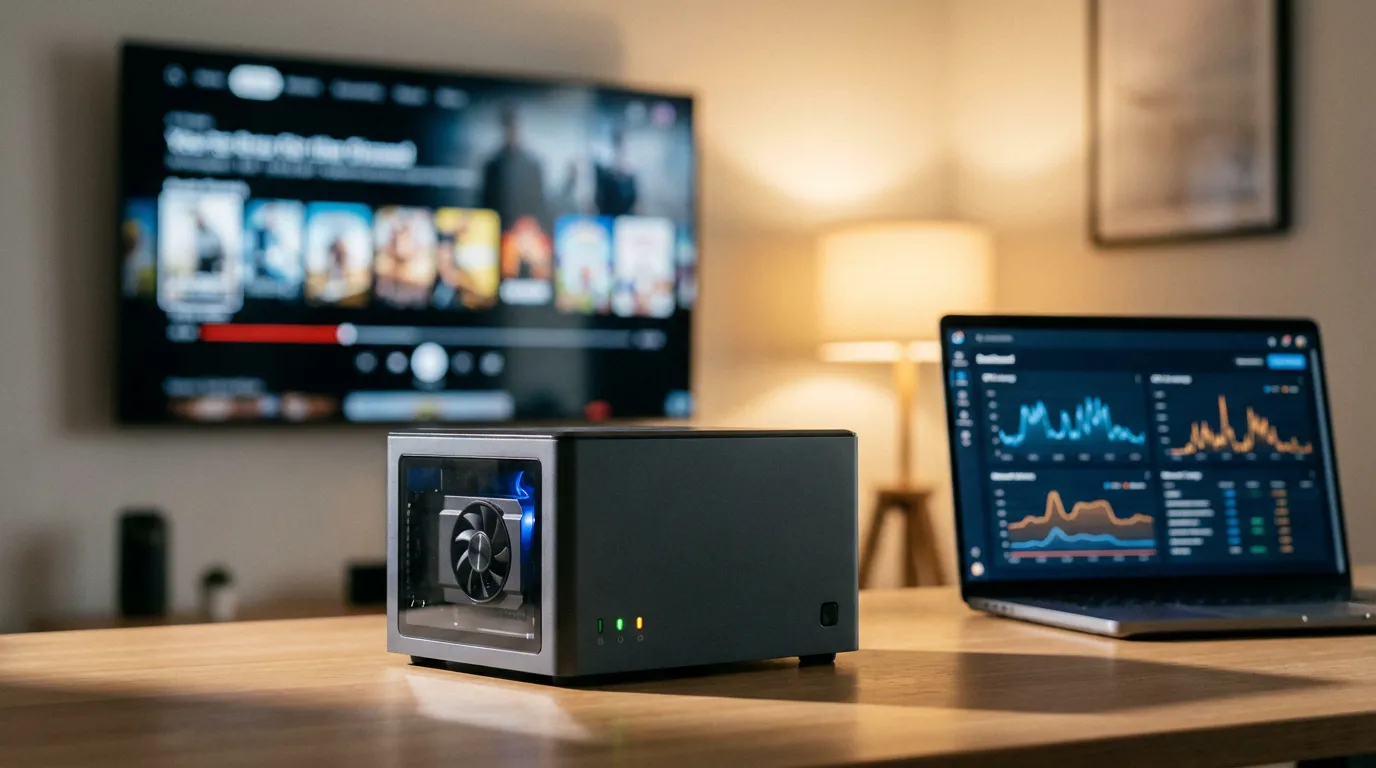
If you cannot avoid transcoding, make it cheaper. Hardware acceleration moves encode and decode work from your CPU to a GPU or media engine. That cuts power use and heat. It also increases how many streams your server can handle.
Here is the part that makes me squint. Hardware transcoding can reduce quality at the same bitrate compared to slow CPU encodes. For live transcoding, I accept that trade. I care more about smooth playback than perfect compression in a real-time stream.
Enable hardware acceleration on the server
In the Jellyfin admin dashboard:
- Go to Dashboard.
- Open Playback or Transcoding settings.
- Find Hardware acceleration.
- Select the method that matches your platform, such as VAAPI, Quick Sync, NVENC, or AMF.
- Enable hardware decoding and encoding where available.
Jellyfin can also do hardware-assisted tone mapping for HDR to SDR on some setups. That is a lifesaver if your library has HDR content and your clients cannot display it. It can also be the thing that breaks playback if the driver stack is not happy.
Quick guidance by hardware type
| Hardware | What tends to work well | Common pain |
|---|---|---|
| Intel iGPU | Quick Sync for H.264 and HEVC, low power | Driver and permissions in Docker or Linux |
| NVIDIA GPU | NVENC for stable multi-stream transcoding | Container access to /dev and driver stack |
| AMD GPU | AMF on supported platforms, good decode | More variation by OS and driver versions |
| ARM boards | Hardware decode for select codecs | 4K HEVC and tone mapping can be rough |
If you run Jellyfin on a small board, read a platform-specific guide before you expect miracles. This is where reality bites. I like tiny servers, but I do not like watching them sweat through a high bitrate HEVC transcode.
If you are running Jellyfin in containers, your setup matters even more. Device passthrough and permissions decide whether hardware acceleration works or silently falls back to CPU. If you want a clean container approach, this guide helps: install Jellyfin with Docker Compose and keep your config portable.
Direct Play focused settings that actually move the needle
Turning off transcoding is one step. Making Direct Play succeed is the real work.
Pick a client that plays your library
This feels like a cop-out, but it is the biggest win. A capable client ends transcoding drama. A weak client creates it. If your smart TV app forces transcodes, try a dedicated streaming device that supports HEVC, HDR, and passthrough audio.
Match your library to your devices
If you control your encodes, aim for formats that most clients handle:
- Video: H.264 for widest support, HEVC for space savings if your clients can decode it
- Audio: AAC or AC3 for compatibility, keep TrueHD and DTS if your client can bitstream
- Subtitles: SRT when you can
If you want to keep high-end audio, make sure your playback chain supports it. Your TV might not pass DTS to your receiver even if your receiver supports it. That mismatch triggers audio transcode and it can also trigger full video transcode if subtitles get involved. If your audio path feels cursed, this walkthrough can help you sort out the hardware side: HDMI ARC and eARC troubleshooting for soundbars and receivers.
Watch the bitrate settings on clients
Bandwidth-conscious users set low bitrates on clients and then wonder why Jellyfin transcodes. That setting is doing its job. It forces Jellyfin to fit the stream into a smaller pipe.
If you want Direct Play on your local network, set the client to maximum or original quality for local playback. Keep remote quality separate if your upload cannot handle it.
How to confirm what Jellyfin is doing during playback
Do not guess. Jellyfin tells you.
Use the playback info overlay
Most Jellyfin clients show playback details. Look for labels like Direct Play, Direct Stream, or Transcode. If you see Transcode, check whether it says video, audio, or both.
Use the server dashboard activity view
In the admin dashboard, the active sessions list often shows what each stream is doing, plus the target bitrate and codecs. This is where you catch patterns like “every time I enable subtitles it transcodes” or “this one user forces 4 Mbps on Wi‑Fi.”
Read transcoding logs when things get weird
When playback fails after you disable transcoding, logs tell you why. You will see messages about unsupported codecs, subtitle burn-in, or container limitations. If you want to fix the root cause, this is where you earn it.
Troubleshooting when Jellyfin keeps transcoding anyway
You disabled transcoding and Jellyfin still transcodes, or it refuses to play. Here are the repeat offenders.
Subtitles force burn-in
If the client cannot render the subtitle format, Jellyfin burns it into the video. That is a transcode by definition. Fix options:
- Switch subtitle track to SRT if available
- Disable subtitles for that device
- Convert image subtitles to text outside Jellyfin
- Use a client that supports more subtitle formats
Audio codec mismatch triggers audio transcode
This one is common with DTS and TrueHD. Your file has DTS-HD MA, your client wants AAC, Jellyfin transcodes audio. If you disabled audio transcoding, playback fails.
Fix options:
- Enable passthrough on the client if your receiver supports the codec
- Pick an alternate audio track (AC3 or AAC)
- Keep a compatibility audio track in your files
HDR tone mapping triggers video transcode
If a device cannot display HDR, Jellyfin may transcode to SDR. If you blocked video transcoding, playback fails. If you allow it, the server works harder. Tone mapping can be expensive without hardware support.
Fix options:
- Use HDR-capable clients and displays
- Keep separate SDR versions for problem devices
- Enable hardware tone mapping if your setup supports it
Browser playback limitations
Browsers can be picky about codecs and containers. If you rely on web playback, expect more transcoding. If you hate that, use a native Jellyfin app on the device instead of the browser.
Bitrate cap forces conversion
If the client says “limit to 10 Mbps,” Jellyfin will aim for that even on a fast LAN. That is a self-inflicted wound. Set LAN playback to original quality when you want Direct Play.
Bandwidth conscious streaming without turning your server into a space heater
Some people want to disable transcoding because they want to save bandwidth. That sounds backward since transcoding often reduces bitrate. The real goal is control. You want predictable network use and predictable server load.
Use Direct Play at home and controlled bitrate remote
A clean split works well:
- Home devices use original quality and Direct Play
- Remote users get a capped bitrate that your upload can support
If you share your server with friends, you might want to leave transcoding enabled for those accounts and disable it for your own account. That keeps your living room experience clean while still letting remote people watch.
Consider multiple versions for heavy hitters
For high bitrate 4K remux files, a second 1080p encode can save your server from live transcoding. Jellyfin can pick the right version based on client limits. This adds storage use, but it turns random CPU spikes into calm, predictable streaming.
Performance tuning that helps even when you avoid transcoding
Direct Play reduces server strain, but Jellyfin still needs to scan libraries, fetch metadata, and serve files quickly.
Put your metadata and cache on fast storage
If you can, store Jellyfin’s config, cache, and metadata on an SSD. Browsing libraries feels snappier. Poster loading improves. This does not fix transcoding, but it makes the whole system feel less sluggish.
Fix your network before you blame Jellyfin
A flaky Wi‑Fi link looks like a transcoding problem because it causes buffering. Then users drop quality, which triggers transcoding, and now you have two problems. If you can run Ethernet to your main player, do it. It is boring. It works.
Know when your server hardware is the bottleneck
If you run Jellyfin on a low power box, you can still get a smooth setup, but you need to lean into Direct Play. If you want guidance for small hardware, this is worth your time: Jellyfin on Raspberry Pi performance setup guide.
What disabling transcoding means for prerolls and cinema mode
Prerolls are a fun stress test because they add one more file that must play cleanly before your movie starts. If your preroll uses a codec your client dislikes, you will trigger a transcode before the feature even begins. That feels silly, and it can ruin the vibe.
If you use Jellyfin cinema mode, keep prerolls in a format your main clients Direct Play. I lean toward H.264 in an MP4 container with AAC audio for maximum compatibility. It is not glamorous, but it starts fast and avoids surprise conversions.
If you want ideas and ready-made intros, browse Jellyfin-friendly options here: Jellyfin prerolls and cinema intros. If you want the full setup flow inside Jellyfin, this guide walks through it: Jellyfin prerolls and cinema mode setup guide.
A practical checklist for a low transcode Jellyfin setup
If you want a fast path, do this in order:
- Pick one test user and disable video and audio transcoding for that account.
- Test your main playback device with your common media types, including subtitles.
- If subtitles force transcode, switch to SRT or change devices.
- If audio forces transcode, enable passthrough or keep compatibility audio tracks.
- Set LAN playback quality to original on clients.
- For remote users, decide whether you want capped bitrate transcoding or separate versions.
- If you keep transcoding enabled, turn on hardware acceleration and confirm it works under load.
This is the part where you might feel torn. Disabling transcoding feels clean and principled. Then one weird TV refuses to play a file you know is fine. I have been there, staring at a spinning circle, thinking about how a box with “smart” on the label can be so stubborn. If you can standardize your clients, do it. Your future self will thank you.
Common mistakes I see when people try to block transcoding
- They disable transcoding before they understand why it happens. Then everything breaks and they blame Jellyfin.
- They ignore subtitles. Subtitles can flip a Direct Play stream into a full transcode in seconds.
- They rely on browsers for high bitrate playback. Browsers are convenient and also limiting.
- They expect hardware acceleration to fix file compatibility. Hardware acceleration makes transcoding cheaper. It does not remove the need for it.
Where I land on Jellyfin transcoding control
If you care about performance, I think you should treat transcoding like an emergency tool, not your default pipeline. Direct Play is calmer. It is cleaner. It keeps your server from doing busywork that your playback device should handle.
Disable transcoding for your own account if your devices support your library. Keep it enabled for the accounts and devices you do not control. Then add hardware acceleration so those edge cases do not turn into a CPU bonfire. That balance feels human. Strict where it matters. Flexible where it saves you from late-night troubleshooting.